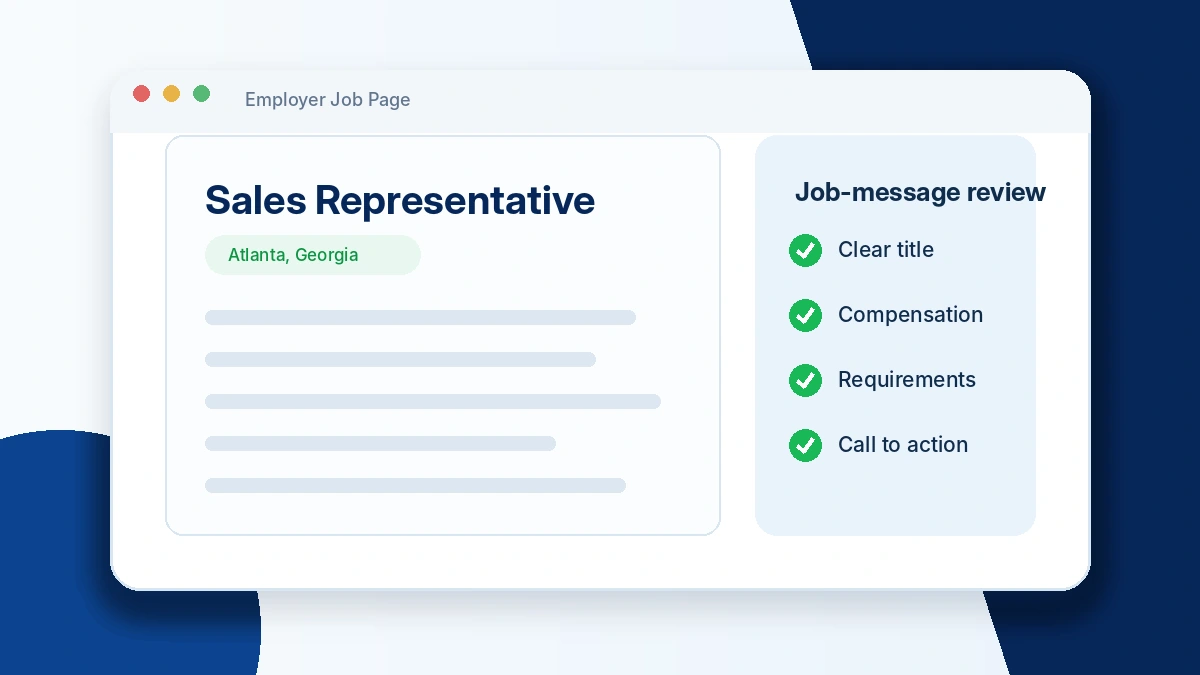
Start with the title
Use the title candidates actually search for. “Sales Representative,” “Account Executive,” “Territory Sales Representative,” and “Business Development Manager” suggest different work. Avoid inflated or vague titles that hide the actual role.
State compensation clearly
Explain the base salary or range, commission structure, target OTE, payment timing, accelerators, caps, draws, guarantees, benefits, expenses, and any conditions that affect payout.
Explain the candidate value proposition
Describe the market, product, customer problem, territory, lead flow, training, manager support, advancement potential, and why a successful salesperson would choose this role over alternatives.
Separate responsibilities from performance expectations
Responsibilities describe activities. Performance expectations describe results. Explain prospecting, meetings, pipeline, quota, account growth, CRM activity, travel, reporting, and the expected ramp period.
Use required and preferred qualifications carefully
Keep true minimum requirements short. Move helpful but nonessential experience into a preferred section. Excessive requirements can reduce the applicant pool without improving hiring quality.
Sales representative outline
| Section | What to include |
|---|---|
| Opening | Role, location, work arrangement, compensation, and opportunity summary |
| Success | Quota, territory, pipeline, sales cycle, and early milestones |
| Responsibilities | Prospecting, discovery, presentations, proposals, closing, retention, CRM |
| Qualifications | Required experience, skills, travel, license, education when necessary |
| Offer | Base, commission, benefits, expenses, training, tools, advancement |
| Application | Required documents, questions, process, timing, and contact expectations |